Hey guys, it’s Jake from your go-to centrifugal blower supplier. Let’s cut to the chase—if you’re reading this, odds are you’ve dealt with that garbage blower that craps out on you mid-shift, causes unplanned downtime, and eats into your profits like no other. I’ve been in this game for 12 years, working directly with plants, HVAC contractors, and waste management teams, and I’ll tell you straight: quality isn’t just a buzzword for us. It’s the reason we’ve got repeat customers who call us before they even start scouring the internet for new gear. Today, I’m breaking down exactly how we (and you, if you’re vetting blowers) make sure centrifugal blowers hold up—no fluff, no jargon, just real stuff that works. Centrifugal Blowers

First off, let’s start with the core part that makes or breaks a blower: the impeller. This isn’t some plastic afterthought we bolt on to save a buck, y’know? Impellers are the heart of the centrifugal blower—they spin to move air, so if they’re off, the whole unit’s useless. Early on, I saw a competitor’s impeller that was cast from scrap aluminum, had wobbly blades, and wasn’t balanced at all. We learned real fast that a bad impeller leads to vibration, higher energy bills, and bearings that die in 6 months instead of 5 years. So what do we do differently? We use either high-grade carbon steel for heavy-duty jobs or 316 stainless steel for corrosive environments—no cheap alloys here. And we machine every impeller, not just cast it. CNC machining cuts blades to a tolerance of 0.002 inches—less than the width of a human hair. That precision isn’t overkill; it means the impeller spins dead-even, no wobble. Then there’s dynamic balancing, not static balancing for the sake of “checking a box.” Static is just weighing the impeller on a scale, but dynamic means spinning it at full RPMs and checking for imbalance across the entire shaft—something that matters for big industrial blowers. Last year, we sent a unit to a grain elevator that used to replace blowers every 8 months. Our impeller’s still running, and their energy usage dropped 12% because it’s moving air more efficiently. That’s the kind of win we live for.
Next up, the housing (that’s the big spiral casing the impeller sits in). A lot of suppliers cut corners here by using thin-gauge metal that flexes under pressure. If the housing bends, the airflow gets messed up, and you lose performance. We spec at least 1/4-inch thick steel for most standard blowers, and 3/8-inch for heavy-duty models. But it’s not just thickness—how we weld the housing matters too. We don’t rush the welds; every seam is TIG-welded by certified techs, then pressure-tested for leaks. How? We hook it up to air at 1.5x the operating pressure, submerge it in water, and check for bubbles. Yeah, it’s time-consuming, but a leaking housing is a silent killer—you’re wasting energy because air’s escaping before it even gets where it needs to go. We had a textile plant come to us last year because their old blower was losing 20% of its air through a bad weld. Once we swapped it out, their dye drying process sped up, and their electric bill was way lower. No more wasted money—just solid, reliable airflow.
Bearings and shafts are another pair of parts that most people overlook, but they’re the real workhorses. I’ve seen blowers with bearings from random cheap factories that seize up after a year because they can’t handle the constant load. We use only Timken or SKF bearings—no off-brand garbage. And here’s the thing: we size the bearings specifically for the blower’s load, not just grab whatever fits the housing. A 10,000 CFM blower needs a bearing rated for at least 15,000 CFM capacity, plain and simple. The shaft? We use cold-rolled steel, turned to a precision tolerance, and induction-hardened in the load zones to resist wear. We also install lip seals and labyrinth seals—lip seals keep oil in and dust out, labyrinth seals add an extra layer for dusty or wet environments. Last quarter, we had a quarry that was dealing with bearing failures every 10 months because their old blower’s seals let in rock dust. Our blower’s been running for 18 months straight with no bearing issues. That’s the kind of reliability that keeps clients coming back.
Motor and drive systems are the next piece of the puzzle—you can have the best impeller and housing, but if the motor’s a dud, the whole thing’s a paperweight. A lot of suppliers pair their blowers with cheap motors that don’t have enough torque or efficiency. We use NEMA Premium Efficiency motors, minimum—these are tested to run at 95% efficiency, which saves clients tons on electricity over the blower’s lifespan. For drives, we offer both direct-drive and belt-drive options, but we size them correctly. Belt drives are great for applications where you need variable speed, but we make sure the belts are from Gates or Bando, not the cheap stuff that snaps. We also pre-align every motor and drive during assembly—no leaving that to the install team. Misalignment causes vibration, which wears out bearings and shafts fast. We use laser alignment tools, not just a straight edge like some old-school shops. That small step cuts down on startup issues and makes sure the blower runs smooth from day one.
Quality control isn’t just at the end of the line—it’s in every single step of the process, and we test every blower before it leaves our warehouse. Let’s be real: if you ship a bad blower, even if it’s a tiny issue, that’s a reputation killer. Our QC team runs three main tests before any unit goes out. First, a no-load test: we spin the blower without any airflow, check for vibration levels (we target under 0.1 mm/s, which is super low), noise levels (under 85 dB at 3 feet—no ear-splitting racket), and amp draw to make sure it’s not drawing too much power. Second, a full-load test: we hook it up to a test stand, push it to its maximum CFM and pressure rating, and monitor all the specs. Third, a leak test we do on the housing, like I mentioned earlier, plus a final visual inspection to make sure no parts are loose, welds are solid, and paint’s not chipped (paint’s a small thing, but it prevents rust, which kills metal parts over time). We also have a 24-hour burn-in test for all industrial blowers over 5,000 CFM—we run them nonstop for a day to catch any hidden issues before they get to the client. Last year, we caught a slight imbalance in a blower during the burn-in that would’ve caused a bearing failure in 6 months. That’s the stuff that doesn’t make the news, but it’s why our clients trust us.
Material selection deserves its own shoutout, because it’s where a lot of suppliers cut corners. For corrosive environments—like wastewater treatment plants or chemical facilities—we don’t just paint the blower and call it corrosion-resistant. We use 316 stainless steel for impellers and housings, which has chromium and molybdenum to stand up to acids and salts. For mild environments, like HVAC or grain handling, we use high-grade carbon steel with a powder-coat epoxy finish that’s way more durable than regular paint. We never use galvanized steel for critical parts—it rusts fast, especially when exposed to moisture. I once had a food processing plant that had a blower made of galvanized steel; it rusted through in 18 months because of all the moisture from washing equipment. We swapped it out for a powder-coated carbon steel unit, and it’s still going strong 3 years later. That’s material selection done right, not just cheap.
Installation support matters too, because even the best blower won’t work if it’s installed wrong. We don’t just drop a box at the client’s door and disappear. Our team helps with site assessments, gives clear install instructions, and even offers on-site tech support if needed. We also provide a 2-year warranty on all our blowers, and a 5-year warranty on impellers and shafts—way longer than most competitors. If something goes wrong, we show up fast, no hoops to jump through. Last year, a welding contractor in Texas had a blower stop working during a peak production run. We had a tech on-site that same morning, diagnosed a minor belt issue, and fixed it in 45 minutes. No downtime loss for their job, no hassle for them.
Look, I get it—when you’re buying a centrifugal blower, you’re focused on upfront cost. But cutting corners on parts, testing, or materials will cost you way more in the long run: unplanned downtime, repair bills, higher energy costs, and replacement units every couple years. We build every blower like we’d want it built for our own shop—no garbage parts, no rushed work, no cutting corners.
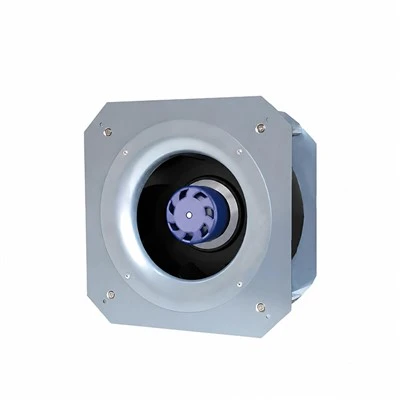
If you’re in the market for a reliable centrifugal blower, or you’re tired of replacing blowers that let you down, hit us up to talk through your needs. We’ll work with you to find the right size, type, and configuration for your specific job, no pushy sales tactics, no hidden fees. Just solid gear and support. Contact our team to get started.
EC Plug Fans References
- centrifugal blowers: design selection and application, 2nd edition, by Karassik, Igor J., et al.
- rotating equipment fundamentals: centrifugal pumps, blowers, and compressors, by Bloch, Heinz P., and Hoefner, Allan R.
- air movement equipment selection and sizing guide, american society of heating, refrigerating and air-conditioning engineers (ASHRAE)
Suzhou Blauberg Motoren Technology Co., Ltd.
Suzhou Blauberg Motoren Technology Co., Ltd. is one of the most professional centrifugal blowers manufacturers and suppliers in China, featured by quality products and good service. Please rest assured to buy bulk customized centrifugal blowers from our factory. Welcome to contact us for quotation.
Address: No. 8, Zhu Street, Industrial Park, Suzhou, JiangSu, China
E-mail: Andie@blauberg.cn
WebSite: https://www.blaubergmotors.com/
