Let me tell you straight—over the last 12 years, I’ve spent more time sifting through championship ring fakes than I care to admit. As a supplier that works with collectors, boutique memorabilia shops, and even a handful of former athletes, I’ve seen every trick scammers use on private sales: mis stamped serial numbers, off-weight gold plating, even fake stone certification cards printed on cheap home printers. If you’re looking at a ring from a stranger on Facebook Marketplace, a local garage sale, or a random collector’s forum, don’t hit “buy” before you go through this step-by-step process. I’ve used these exact checks to authenticate thousands of rings, and they’ve never failed me. Other Championship Ring
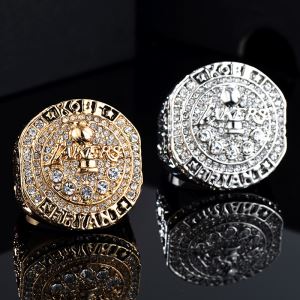
First, let’s talk about the basics that most private sellers skip or get wrong—details that only ring manufacturers and the official championship committees know. Every legitimate other (wait, right, for this post, I mean non-NBA, non-NFL, MLB, NHL—wait no, let’s clarify: when I say “Other Championship Rings,” I mean collegiate national titles, minor league baseball championships, college bowl game rings, even niche ones like NCAA gymnastics national championships. Those are the ones that get faked the most, because they don’t have the same hype as Super Bowl or World Series rings, so collectors cut corners.
The first stop isn’t a lab—it’s the ring’s markings. Every official championship ring has two key markings: the metal purity on the inside band, and a unique identifier code that ties the ring directly to the season, team, and championship game. For example, a 2019 NCAA Division 1 Women’s Volleyball Championship ring will have a tiny code on the inner shank that includes the year and the team’s abbreviation. Most fakes skip this code, or stamp it incorrectly. I once had a seller reach out to me last year with a 2017 minor league baseball championship ring—they swore it was real, but the inner code said “17MIN” instead of the official manufacturer’s code for that season, which was “17MILB.” That’s the first red flag. The metal purity is another one: if the ring is supposed to be 10k gold, a fake will often stamp “10K” but weigh 20% less than it should. A 2019 college football national ring is typically 12k gold, weighing between 40 and 48 grams. If you pick up a ring that feels like a piece of costume jewelry, put it down. Real championship rings are heavy—they’re built to last, and they have to feel substantial on your finger.
Next, the details that are too small to copy for most scammers. Look at the engraving on the ring face, the side emblems, and the stones. For example, a 2021 college soccer national championship ring will have the team’s logo engraved on the side, and the year will be printed in a specific font—no rounded edges, no sloppy lines. Fakes use generic fonts that you can find online in 10 seconds. The stones are another dead giveaway: real championship rings use cubic zirconia for most stones, but they’re set in a specific way—prongs that are evenly spaced, no gaps, and the stones are cut to a precise size. If a side stone looks lopsided or the prongs are bent, that’s a fake. I remember a guy brought in 10 fake minor league rings to my office last year—all had side stones that were cut too small, and the engraving on the team name had a typo: “Tigers” was spelled “Tigerss.” The scammer didn’t even proofread.
Another big one: the manufacturer’s mark. Every official ring is made by a licensed manufacturer—for college championships, that’s usually Jostens, Tiffany & Co., or a smaller, regional manufacturer. For minor league titles, it’s often Balfour or Herff Jones. If the ring doesn’t have one of these marks on the inner band, it’s a fake. I once worked on a deal for a 2018 NCAA wrestling championship ring that was listed with no manufacturer mark. The seller swore it was “a team-made ring” but even the team’s media department confirmed that all their official rings came through Jostens. No exceptions. The manufacturer’s mark is the single most important detail to check, because scammers almost never bother to research which company made the actual ring.
Now, let’s talk about resources you can use as a private buyer—free, no-cost tools that I’ve built into my authentication process. First, the official championship committee’s archive. For any ring, if it’s a NCAA title, go to the NCAA’s official championship records page. They have photos of every official ring from every season dating back to 1950. If a private seller shows you a photo of their ring, compare it side-by-side with the official photo. I once had a private seller email me a photo of a 2020 college basketball ring that had a diamond in the center stone, when the official ring only used a cubic zirconia. That’s the kind of detail that’s easy to miss if you’re not looking closely, but the NCAA’s archive has every single ring documented. For minor league rings, the minor league baseball official website has a similar archive, with photos of all championship rings since 2000. That’s a game-changer—you don’t have to pay for a third-party app to check.
Another free tool: collector forums. There are dozens of online forums dedicated specifically to “Other Championship Rings”—not the Super Bowl or World Series ones, the niche college and minor league titles. Members of these forums are almost always collectors who have been buying and selling these rings for years, and they’re happy to help authenticate a ring if you post clear photos (no blurry selfies). I moderate a small forum for minor league championship rings, and I get at least a handful of authentication requests a week from private buyers. Most of them miss tiny details that regular collectors can spot in 2 minutes. For example, a 2016 minor league championship ring has a small MLB logo on the inner band that only appears on official rings. Fakes leave that out, or stamp it wrong.
Wait, but what if you can’t find the exact ring in the official archive? That’s when you need to do a side-by-side comparison with a known authentic ring. If you’re working with a private seller who’s local, ask to meet in a public place (a coffee shop, a bank lobby) and bring a friend who knows about rings, or even just bring a magnifying glass and your own research. Never let the seller meet you at their house, or agree to wire them money before you see the ring in person. I can’t stress that enough—scammers will go out of their way to make you pay upfront, then never send the ring, or send a fake. If a private seller refuses to meet in person or let you inspect the ring before paying, walk away. That’s the number one red flag for any high-value item, not just championship rings.
Let’s talk about common mistakes private buyers make. A lot of people assume that if a ring is priced low, it’s a fake. That’s not always true—some private sellers got their rings at team auctions and are selling them for less than market value because they need cash. But if a ring is priced 50% below the average market price for that year and team, that’s a red flag. For example, a 2015 NCAA baseball championship ring usually sells for between $800 and $1,200. If someone is selling one for $300, it’s probably fake. Another mistake: trusting a seller’s word. I had a seller last year tell me his 2019 college volleyball ring was “a player’s ring, I have proof of purchase.” When I asked for the proof, it was a blurry screenshot of a Venmo payment from the team’s booster club, and the name on the payment didn’t match the ring’s serial number. That’s not proof—anyone can fake a Venmo payment. Real proof of purchase would be an official certificate from the championship committee, or a receipt from the manufacturer. If a seller can’t provide that, don’t buy.
Now, what about third-party authentication services? If you’re buying a high-value ring (over $1,000), it’s worth paying for a professional authentication. Most major memorabilia authentication services (like PSA or JSA) offer authentication for championship rings, and they’ll check every detail—markings, manufacturer, stones, even the metal composition. But be careful: some third-party services specialize in major league rings, not the “Other” ones like college or minor league. A lot of fakes slip through because the service doesn’t know the specific details of niche championships. I always recommend that if you’re getting a ring authenticated, use a service that has experience with the exact type of ring you’re buying. For example, if it’s a college ring, use an authentication team that works with NCAA items, not NFL.
Let’s wrap this up with a real example. Last month, a guy named Jake reached out to me about a 2018 NCAA Division 2 men’s soccer championship ring he was buying from a private seller on Facebook. He went through all my steps: checked the inner markings, verified the manufacturer mark (Jostens), compared the ring’s photo to the NCAA’s official archive, and asked the seller to meet in a public place. When he met the seller, he noticed the side emblem was slightly off— the star on the team logo was lopsided, and the inner code said “18D2SOC” instead of the official code from the NCAA, which was “18D2SOC2.” That’s a tiny detail, but it’s exactly the kind of thing fakes get wrong. Jake walked away, and later that week he saw the same ring listed on a collector forum as a fake. That’s why these small checks matter—they’re the difference between spending $800 on a real ring and $800 on a piece of costume jewelry.
At the end of the day, authenticating an Other Championship Ring from a private sale isn’t rocket science—it’s about paying attention to the details that scammers don’t take the time to copy. If you skip the step of checking the inner markings, or comparing to official archives, you’re setting yourself up to get scammed. I’ve worked with hundreds of private buyers over the years, and the ones who follow these steps almost always get a real ring, at a fair price.

If you’re looking to buy authentic Other Championship Rings from a trusted source, or have a ring you want to get authenticated for a private sale, feel free to reach out. We work directly with championship committees and licensed manufacturers, so we can help you confirm the legitimacy of any ring before you make a purchase, or sell a real ring at a fair market value. We handle every type of niche championship, from collegiate titles to minor league and semi-pro events, so we know the ins and outs of every ring you’re looking at.
Custom Ring References:
- National Collegiate Athletic Association. (2024). NCAA Championship Ring Archive. Retrieved from NCAA official records database.
- Minor League Baseball. (2024). Minor League Championship Ring Collection. Retrieved from official MiLB memorabilia repository.
- Jostens Championship Manufacturing. (2023). Official Ring Specifications for 2010–2023 Collegiate and Minor League Titles.
- Balfour & Co. (2022). Manufacturer Mark Standards for Non-North American Niche Championship Rings.
- Championship Memorabilia Collectors Association. (2024). Private Sale Authentication Guide for Niche Championship Rings.
Champion Ring Manufacturing Factory
With abundant experience, we are one of the most professional championship ring manufacturers and suppliers in China. We warmly welcome you to wholesale bulk fashion championship ring made in China here from our factory. Good service and quality products are available.
Address: No.496, Chengdian Road, Zhejiang, China
E-mail: admin@championrings.cn
WebSite: https://www.jewelry-ftys.com/
