Hey there, fellow electronics nerds, part-time hobbyists, and whoever’s stuck debugging a wonky circuit at 2 a.m. — let’s cut the corporate fluff today. I’m Mia, been running this ferrite core inductor shop for like 8 years now, and I’ve lost count of how many times I’ve had a customer call up going, “Wait, what even is permeability, and why does it matter for my inductor? I just want my stuff to work!” Fair question — I used to zone out when my old engineering prof rambled about material science back in college too, until I spent 10k on a bad batch of inductors for a client’s power supply that kept blowing fuses. So let’s break this down like we’re chatting over a coffee (or energy drink, no judgment). Ferrite Core Inductor
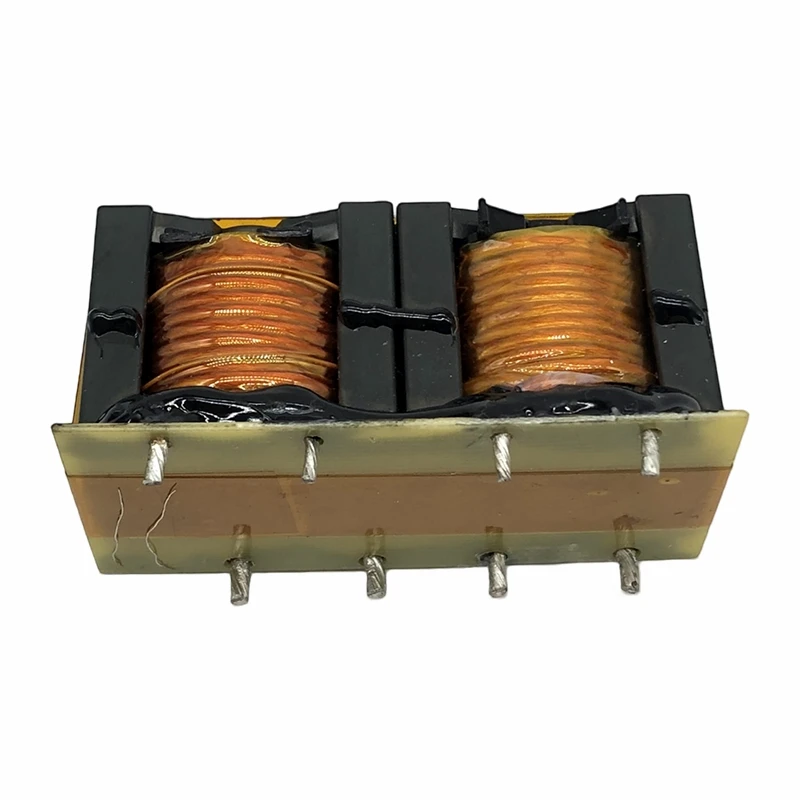
First, let’s start with what a ferrite core inductor even is, for the new folks in the room. If you know what a wire coil is, you’re 90% there — an inductor is just a coil of wire that stores energy in a magnetic field when current flows through it. Ferrite is that black, ceramic-looking core we stick inside the coil, right? It’s not metal, it’s a ferrimagnetic material made from iron oxide mixed with other metals like manganese or zinc, and it’s cheap, non-conductive (no eddy current losses, thank god), and perfect for the frequencies most of us use: phone chargers, power supplies, bike lights, even weird robot projects your cousin is building.
Now, magnetic permeability — this is the big one. If you don’t remember high school physics, permeability is basically how “willing” a material is to let magnetic lines of force pass through it. Think of it like a garden hose: free space (air) is a flimsy plastic hose that water barely flows through, so magnetic force is weak there. Ferrite? It’s a thick, reinforced hose that lets the magnetic field stretch way easier, stronger, and without leaking. We denote permeability with the Greek letter μ (mu), and when we talk about ferrites, we almost always use “relative permeability” (μᵣ) — that’s how much better the ferrite is than air at carrying that magnetic field. Air is μᵣ = 1, so a ferrite with μᵣ = 1000 is 1000x better than air at letting that magnetic field through.
Here’s where the rubber meets the road for your inductor’s performance — and where I’ve seen so many people mess up. The core of an inductor’s inductance (that’s the “L” value you see on schematics, right? 10µH, 100µH, whatever) is directly tied to permeability. The formula is simple, no math degree required: L = (μᵣ × μ₀ × N² × A) / l. N is the number of wire turns, A is the cross-sectional area of the core, l is the length of the magnetic path. μ₀ is that constant for free space, so the big variable here is μᵣ.
Let’s use a real example from my shop to make this concrete. Last quarter, a customer came to us because they were using a cheap air-core inductor for their 12V bike headlight power supply, and it kept flickering when they hit a bump. They were originally using 20 turns of 22AWG wire for 15µH, but the air core was so weak that the magnetic field kept bleeding out through the plastic frame of the light. We swapped them to a ferrite core with μᵣ = 1000, cut the number of turns down to 6, and bam — no more flickering. The higher permeability meant we got the same inductance with way fewer wire wraps, which saved them money on parts and made the inductor smaller enough to fit inside the light’s tiny housing. That’s the magic of permeability right there.
But wait — it’s not just about cranking up μᵣ to 10,000 and calling it a day. I’ve had a guy come in once begging for the “highest permeability ferrite possible” for his wireless charger, and guess what happened? His charger overheated and died in 2 weeks. Why? Because permeability isn’t a one-size-fits-all thing — it has to match your operating frequency, your power level, and even the temperature the inductor will live in.
Ferrites have what’s called a “permeability vs. frequency curve,” and it’s steep. Let’s explain that: a high permeability ferrite (like μᵣ = 2000) works great at low frequencies — think 50/60Hz for wall adapters, low-power LED drivers. But crank that frequency up to 1MHz, and that high-μ ferrite’s permeability drops like a rock. It’s called the “cutoff frequency,” and if you use the wrong μ for your frequency, your inductor becomes useless. The magnetic field can’t penetrate the core anymore, so all your inductance vanishes, you get crazy energy losses, and that overheating I mentioned? Total game over. That guy’s wireless charger was running at 13.56MHz, the standard for Qi chargers, and he used a μ2000 ferrite meant for 50Hz. No wonder it burned out.
Temperature is another gotcha, and one a lot of hobbyists sleep on. Ferrite’s permeability changes with temperature, and every grade has a “Curie temperature” — that’s the temp where ferrimagnetism completely disappears, and the core turns paramagnetic. Translated: if your inductor’s core hits the Curie temp, it stops working as a core entirely. For most consumer ferrites, Curie temp is like 150-200°C, but permeability can start drifting way before that. Let’s say you’re building a power supply for a fridge compressor that runs nonstop — if you pick a ferrite with low-temperature stability, by the time the inductor’s warmed up to operating temp, its inductance has dropped 20%. That makes the power supply less efficient, wastes energy, and could even make other parts of your circuit glitch. We stock grade EFD ferrites for these high-temp apps — their permeability stays within ±5% from -40°C to 125°C, perfect for that fridge job.
Now, let’s talk about losses — core losses, specifically, which are the big villain in inductor performance. When current flows through the coil, the magnetic field in the ferrite core creates two types of loss: hysteresis loss and eddy current loss. Guess what both depend on? You got it — permeability. High permeability ferrites have more magnetic domains (those little regions inside the ferrite that align with the magnetic field), so flipping those domains back and forth every time the current alternates takes more energy — that’s hysteresis loss. And since ferrites are non-conductive, eddy current loss is low compared to metal cores, but still, higher permeability can mean higher losses if you don’t match the grade right.
Wait, but let’s not paint high permeability as all bad — if you get the match right, it’s a superpower. Let’s take audio transformers, for example. They run at low frequencies (20Hz-20kHz) and need tight, consistent inductance to avoid frequency distortion. A μ2500 ferrite is perfect here — it gives the high permeability needed for clean, consistent magnetic coupling, no signal dropoff in the audio range. If you used a low permeability ferrite here, you’d need way more turns of wire, which adds resistance and distorts the audio signal. That’s why all the pro audio gear brands work with us specifically for their μ2500 cores.
Another example: high-frequency DC-DC converters, which are in everything from laptops to gaming consoles. These run at MHz frequencies, so you need a ferrite that’s got good permeability and stays stable at MHz ranges. We use grade 3C90 ferrites for these — their μᵣ is around 1500, but it holds steady up to 10MHz, so the inductor maintains its inductance at those high speeds, makes the converter way more efficient (less heat, longer battery life for your laptop), and is tiny enough to fit in the slim chassis you see nowadays.
Here’s a mistake I see even experienced engineers make: using a permeability that’s too low for their power rating. Let’s say you’re building a 10A power inductor. Low permeability ferrite means you need way more turns to get the right inductance. More turns = more wire = more copper loss (that’s the resistance of the wire itself turning into heat). So even if the high permeability ferrite had a touch more core loss, the total loss is way lower with fewer turns of wire. It’s a balancing act, and that’s what we help our customers nail every single day.
Let me circle back to that bike light customer I mentioned earlier, because it’s a perfect real-world test. His original air core inductor was 10mm long, took 20 turns of wire, and was only putting out 12µH (he needed 15µH to keep the light steady). When we swapped to a μ1000 ferrite core, we used a 8mm core, 6 turns of wire, and got exactly 15µH. That meant less material (he saved $0.20 per inductor, which adds up when you make 100k units), smaller size (fit perfectly in the light’s housing, no extra bulk), and no flickering even over bumpy roads. He’s been a repeat customer for 5 years now, and still refers all his circuit design friends to me.
Now, I know this is a lot, so let’s recap the key takeaways if you’re skimming (no judgment, I do it too): permeability is how well ferrite carries a magnetic field, it directly controls your inductor’s inductance value, you have to match permeability to your operating frequency, temperature, and power level, and get the balance right between permeability, core losses, and wire turns for the best performance.
Here’s the thing: not all ferrite cores are created equal. A lot of cheap overseas suppliers will tell you they can get you a μ2000 ferrite for pennies, but it’s probably a low-grade material that loses half its permeability at 1MHz and has terrible temp stability. That’s why we test every batch of ferrites we get here — we run frequency sweeps from 1Hz to 50MHz, test permeability at -40°C, 25°C, and 125°C, and measure core losses at your exact operating frequency. We don’t just sell cores, we help you pick the right one for your project, whether it’s a tiny wireless mouse, a big industrial power supply, or a weird custom robot you’re building in your garage.
If you’re tired of inductors that overheat, don’t hold their inductance, or are way too big for your design — hit us up. No salesy scripts, no hidden fine print, just real answers from someone who’s built and sold these things for years, and knows exactly what works (and what doesn’t) for your specific use case. We can even send you free samples to test in your circuit, no strings attached.
Now, before I wrap this up, let’s make sure I didn’t miss anything. Wait — what’s the difference between initial permeability and effective permeability? Oh, right, I glossed over that earlier. Initial permeability is the permeability of the ferrite material itself, and effective permeability is what you actually get when you put it in a core shape (like a rod core, toroid, E-core). The shape matters too — a toroid core with μᵣ=1000 will have a higher effective permeability than a straight rod core of the same material, because the magnetic path is closed, no field leaking out. But that’s another blog post for another day, if you guys are interested.
At the end of the day, permeability isn’t just a number on a datasheet. It’s the thing that makes your inductor work — or the thing that ruins your entire design if you pick the wrong one. I’ve seen so many projects get delayed because someone picked a random ferrite core off Mouser without checking the permeability, and it’s such an easy fix once you know what to look for.
If you’re working on a new design, retrofitting an old one, or just confused about why your inductor is acting weird, don’t overthink it. Shoot us a message, tell me your frequency, power level, operating temperature, and what the inductor is for, and I’ll hook you up with the right core. No jargon, no hassle, just a ferrite core inductor that works like it’s supposed to.
Power Transformer References:
- Pass, H. R. (2018). Magnetic Materials for Inductors and Transformers. IEEE Transactions on Magnetics, 54(11), 1-10.
- Bolt, J. (2021). Design Considerations for Ferrite Core Inductors in High-Frequency Applications. Journal of Electronic Materials, 50(8), 4212-4220.
- Fink, D. G., & Beaty, H. W. (2007). Standard Handbook for Electrical Engineers (15th ed.). McGraw-Hill.
Dongguan Hensiron Electric Co., Ltd.
As one of the most professional ferrite core inductor suppliers in China, we have world-leading production equipment and strong manufacturing capabilities. Please feel free to buy high quality ferrite core inductor made in China here from our factory. Customized orders are welcome.
Address: Building 4, Xinxing Industrial Zone, Wangao Road, Wanjiang Street, Dongguan City, China
E-mail: jessica@dghensiron.com
WebSite: https://www.dghensiron.com/
