When I first started hearing questions from operators and fleet managers about quick coupler hitches for backhoes, I’ll admit I was curious too. I’ve been supplying quick coupler systems to construction sites across the Midwest for over a decade, and most of our work has been with excavators. But backhoes—those iconic, two-workhorse machines that do digging, loading, trenching, and material handling in tight spots—seemed like a different beast entirely. People kept asking: Can a quick coupler hitch actually be used on a backhoe, or is that just a solution made for bigger, faster excavators? Quick Coupler Hitch

Let’s cut to the chase: Yes, a properly matched quick coupler hitch can absolutely be used on a backhoe. But there’s a lot more to it than just swapping a part out. I’ve seen good installations that boost productivity by 30% on small job sites, and I’ve seen bad ones that caused operator frustration, safety risks, and even equipment damage. That’s why I wanted to break this down from the perspective of someone who builds these hitches and works side-by-side with backhoe operators every day.
First, let’s get clear on what a backhoe’s setup is, because that’s where the confusion starts. A standard backhoe has two main work areas: the front loader arm, which lifts and moves bulk material like dirt or gravel, and the rear backhoe arm, the digging arm that fits different attachments like buckets, breakers, or augers. Most talk about quick couplers for backhoes focuses on the rear digging arm, since that’s where operators switch attachments most often. But some people also use them on the front loader arm for quick bucket swaps too. Either way, the core function of a quick coupler—letting you lock a new attachment in place in seconds instead of minutes of fumbling with pins—stays the same.
Now, why would a backhoe operator even want a quick coupler? Let’s think about a typical day on a residential construction job, for example. You’ve got a backhoe that starts with a 24-inch digging bucket to trench for foundation footings. Mid-morning, you switch to a 48-inch cleanout bucket to level the bottom of the trench. By lunch, you need a hydraulic breaker to knock out an old concrete patio. Afternoon brings an auger to plant tree pits for a small landscaping project. Without a quick coupler, each of these swaps means a operator has to get off the machine, line up three heavy pins with the attachment, hammer them in by hand (or with a small sledge), then lock each pin from falling out mid-use. That process can take 5 to 10 minutes per swap, and if you’re doing three swaps a day, that’s 20 to 30 minutes of wasted time—time you could be digging, breaking, or moving material. With a quick coupler, that same swap takes 60 seconds flat. I’ve had operators tell me that over the course of a month, that adds up to an extra full day of work, no extra hours needed.
But here’s the thing that trips people up: not all quick couplers are made for backhoes. Excavator quick couplers are built for higher operating weights and longer reach, so they’re bigger and heavier than what a backhoe’s arm can safely handle. Trying to mount an excavator coupler on a backhoe digging arm is a recipe for stress on the arm’s hydraulic cylinders, bent pins, or even a dropped attachment—all of which are safety hazards. That’s why when we design our backhoe-specific quick couplers, we start with matching the coupler’s weight and load rating to the backhoe’s model. A John Deere 310L has different arm specs than a Case 580N, so the coupler has to be calibrated to fit both the machine’s lift capacity and the size of its attachment pins.
Another key point is safety features. Backhoe operators often work in tight spaces: next to house foundations, near power lines, or in areas with workers on foot. A quick coupler has to have a secondary lock that engages automatically when the coupler closes, so you don’t have to rely on a manual pin that could slip. We build our backhoe couplers with a dual-locking system: the first lock engages when the coupler latches onto the attachment’s pin, and a second, separate lock activates automatically to prevent the coupler from opening even if the main hydraulic line fails. We also add a visual indicator on the side of the coupler so the operator can check at a glance that both locks are engaged, no climbing under the arm or getting off the machine. That’s a big deal for safety—OSHA data shows that attachment drops are one of the top causes of small construction equipment accidents, so building a coupler that prevents that is non-negotiable.
I’ve seen first-hand how a good quick coupler changes daily operations. Last year, we worked with a small contractor in Columbus, Ohio, who had a fleet of three backhoes doing mostly residential digs and small commercial repairs. Before they installed our couplers, their operators complained about sore shoulders from hammering pins, and they often rushed swaps and skipped checking pin locks because they were in a hurry. After switching, their accident reports dropped to zero, and their project turnaround time went down by 25%. The owner told me that they used to turn down small jobs because they couldn’t fit them into their schedule, but now they could take two small jobs in the same week that would have only fit one before.
That said, there are limitations to keep in mind. Quick couplers add a small amount of weight to the end of the backhoe arm—usually between 50 and 100 pounds, depending on the model. For smaller backhoes (under 60 horsepower), that extra weight can reduce lift capacity slightly, so we always work with operators to recommend a coupler that balances strength with minimal added weight. We also advise operators not to use the quick coupler to lift heavy loads that exceed the backhoe’s rated capacity, even if the attachment is locked in. The coupler is a connection point, not a lifting point on its own—you always lift from the attachment’s bucket lugs or designated lifting points.
Another common question: Can I use standard attachments with a quick coupler? Yes, absolutely. Our couplers are designed to fit the standard pin sizes that most backhoe attachments use, so you don’t have to buy all new attachments to make them work. If you have an older set of buckets or breakers, we can also make custom adapter plates to fit the coupler to non-standard pins. We’ve worked with operators who have 10-year-old attachments that they don’t want to replace, and adapter plates let them keep using those while getting the benefits of a quick coupler.
I think a lot of skepticism about quick couplers for backhoes comes from the fact that some cheap, generic couplers on the market don’t account for backhoe-specific needs. Those couplers are often made from thinner steel, have weak locking systems, and aren’t calibrated to match backhoe arm specs. We’ve had customers come to us after buying a cheap coupler online, only to have it bend after three months of use or drop an attachment on a job site. That’s why we prioritize engineering couplers that are built for backhoes, not just quick and cheap to make. Each of our couplers goes through load testing to make sure it can handle the maximum rated load for the backhoe model it’s designed for, and we back every one with a two-year warranty.
Last summer, I was on a job site in Indianapolis where a crew was using one of our couplers on a backhoe digging footings for a small strip mall. The operator, a guy named Mike who’d been running backhoes for 20 years, told me he was skeptical at first. “I’ve used quick couplers on excavators before, but I thought backhoes were too finicky for them,” he said. “But this thing? I swapped from digging bucket to cleanout bucket in 45 seconds. No more getting my hands dirty hammering pins at the end of the day. My back doesn’t hurt like it used to.” That’s the kind of feedback that makes all the engineering work worth it—operators who don’t have to fight their equipment, and owners who see real bottom-line benefits.
So, to wrap this up: A quick coupler hitch is not only usable on a backhoe, it’s a game-changer for productivity and safety when it’s the right type of coupler for your machine. The key is to skip the generic excavator couplers or cheap online options, and go with a coupler that’s designed specifically for backhoes, with load ratings matched to your model, a solid dual-locking safety system, and the ability to work with your existing attachments.
If you’re a backhoe operator or fleet manager looking to cut down on attachment swap time, reduce workplace injuries, and get more done in a day, a backhoe-specific quick coupler is worth every penny. It’s not a complicated upgrade, but it’s one that will make a noticeable difference in how your team works.
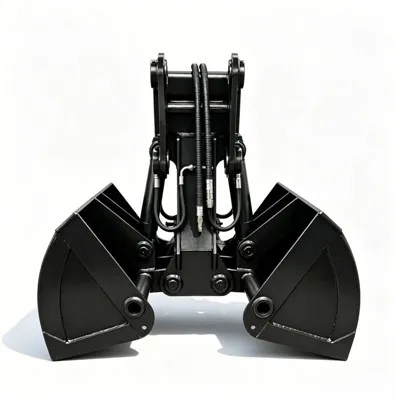
If you’d like to learn more about our backhoe quick coupler models, compare fit for your specific backhoe, or discuss how to integrate a coupler into your current operations, feel free to reach out for a consultation. We work with contractors of all sizes, from small one-man operations to large commercial fleets, and we can help you find the right solution for your needs.
Excavator Attachment References
- Occupational Safety and Health Administration (OSHA). (2022). "Small Equipment Attachment Safety: Preventing Dropped Attachments". Construction Safety and Health guidelines.
- Association of Equipment Manufacturers (AEM). (2021). "Backhoe Attachment Efficiency Report: Productivity Gains From Quick Coupler Adoption". Equipment Industry Data Series.
- International Society of Automation (ISA). (2020). "Load Calibration for Backhoe Work Arm Attachments". Construction Equipment Engineering Journal.
Hope Precision Machinery Co., Ltd.
As one of the most professional quick coupler hitch manufacturers and suppliers in China, we also support customized service. Please feel free to buy high quality quick coupler hitch for sale here from our factory. For more information, contact us now.
Address: No.8 Shenzhen Street, Development Zone, Yantai,Shandong ,China
E-mail: lulu@hope-breaker.com
WebSite: https://www.hopeequip.com/
