As a seasoned supplier in the explosion-proof fan industry, I’ve encountered numerous inquiries regarding the disparities between explosion-proof axial fans and explosion-proof centrifugal fans. These two types of fans serve critical roles in hazardous environments, yet they possess distinct characteristics that make them suitable for different applications. In this blog, I’ll delve into the key differences between these two fan types, shedding light on their design, functionality, performance, and typical use cases. Explosion-proof Fan

Design and Structure
The most apparent difference between explosion-proof axial fans and explosion-proof centrifugal fans lies in their design and structure. Axial fans are characterized by their simple and compact design. They consist of a set of blades mounted on a central hub, which rotates around a shaft. The airflow in an axial fan moves parallel to the axis of the fan, similar to the movement of air through a cylinder. This design allows for a relatively high volume of air to be moved at a low pressure.
On the other hand, explosion-proof centrifugal fans have a more complex structure. They feature a housing, a impeller, and a motor. The impeller is designed with curved blades that are arranged in a radial pattern. As the impeller rotates, it draws air in from the center and expels it radially outward at a high velocity. This centrifugal force creates a high pressure, making centrifugal fans suitable for applications that require a high static pressure.
Airflow and Pressure Characteristics
The airflow and pressure characteristics of explosion-proof axial fans and explosion-proof centrifugal fans are significantly different. Axial fans are known for their high airflow capacity. They can move a large volume of air quickly, making them ideal for applications where ventilation and air circulation are the primary concerns. However, they typically generate a relatively low static pressure. This means that they are not well-suited for applications that require air to be forced through ducts or other restrictive passages.
In contrast, explosion-proof centrifugal fans are designed to generate high static pressure. They can overcome the resistance caused by ducts, filters, and other components in a ventilation system, allowing air to be delivered to specific locations. While centrifugal fans may have a lower airflow capacity compared to axial fans, they are better equipped to handle applications that require air to be pushed or pulled through a long or narrow ductwork.
Efficiency and Energy Consumption
Efficiency and energy consumption are important considerations when choosing between explosion-proof axial fans and explosion-proof centrifugal fans. Axial fans are generally more energy-efficient than centrifugal fans, especially in applications where a high volume of air needs to be moved at a low pressure. Their simple design and direct airflow path result in less energy loss, making them a cost-effective choice for large-scale ventilation systems.
However, in applications where a high static pressure is required, centrifugal fans may be more energy-efficient. Their ability to generate high pressure allows them to overcome the resistance in the system with less power consumption compared to axial fans. Additionally, modern centrifugal fans are often equipped with advanced motor technologies and aerodynamic designs, further improving their energy efficiency.
Noise Level
Noise level is another factor that can influence the choice between explosion-proof axial fans and explosion-proof centrifugal fans. Axial fans tend to produce more noise than centrifugal fans, especially at high speeds. This is because the blades of an axial fan rotate at a high velocity and create a significant amount of turbulence in the airflow. In contrast, centrifugal fans are generally quieter due to their more enclosed design and the way they handle the airflow.
In applications where noise is a concern, such as in residential or commercial buildings, centrifugal fans may be a better choice. However, advancements in axial fan technology have led to the development of low-noise axial fans that can operate quietly while still providing high airflow capacity.
Applications
The differences in design, airflow, pressure, efficiency, and noise level between explosion-proof axial fans and explosion-proof centrifugal fans make them suitable for different applications.
Explosion-proof axial fans are commonly used in applications where large volumes of air need to be moved quickly, such as in industrial warehouses, mines, and tunnels. They are also used in cooling systems for electrical equipment and in ventilation systems for hazardous areas where the risk of explosion is present.
Explosion-proof centrifugal fans, on the other hand, are often used in applications that require high static pressure, such as in HVAC systems, dust collection systems, and fume extraction systems. They are also suitable for applications where air needs to be delivered to specific locations, such as in cleanrooms and laboratories.
Conclusion
In conclusion, explosion-proof axial fans and explosion-proof centrifugal fans are two distinct types of fans with different design, airflow, pressure, efficiency, and noise characteristics. The choice between these two fan types depends on the specific requirements of the application, including the volume of air to be moved, the static pressure needed, the energy efficiency desired, and the noise level acceptable.
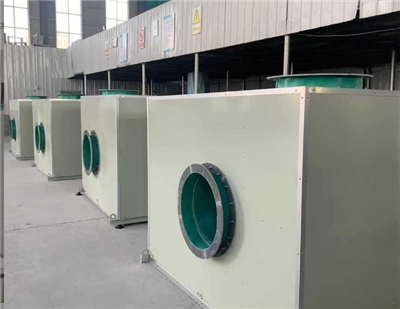
As a supplier of explosion-proof fans, I understand the importance of choosing the right fan for your application. Our team of experts can help you evaluate your needs and recommend the most suitable fan type and model. We offer a wide range of explosion-proof axial fans and explosion-proof centrifugal fans that are designed to meet the highest safety and performance standards.
High Temperature Fan If you’re in the market for explosion-proof fans, I encourage you to contact us to discuss your requirements. Our knowledgeable sales team will be happy to provide you with detailed information, product specifications, and pricing. We look forward to working with you to find the perfect ventilation solution for your hazardous environment.
References
- “Industrial Ventilation: A Manual of Recommended Practice,” American Conference of Governmental Industrial Hygienists.
- “The Fundamentals of Fan and Blower Systems,” Air Movement and Control Association International.
Nantong Nanyang Fan Manufacturing Co., Ltd.
As one of the leading explosion-proof fan manufacturers and suppliers in China, we also support customized service with low price. Please feel free to buy discount explosion-proof fan made in China here from our factory. For quotation, contact us now.
Address: North End of Jiuwei Port Bridge, Nantong City, Jiangsu Province
E-mail: nyfji@126.com
WebSite: https://www.nanyangfan.com/
