Hey there, if you’ve ever walked through a bakery (or worse, stared at your fridge at 7 PM craving something soft, buttery, and a little fancy) you’ve probably wondered how those cute, perfectly shaped, uniformly decorated fancy buns make it from raw dough to your hands. I’ve been part of the fancy bun production line game for over a decade now, and let me tell you—one of the most common questions I get from new bakery owners is: “Do fancy bun production lines even include packaging machines?” Fancy Bun Production Line
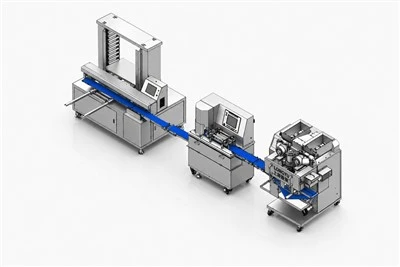
Let’s cut to the chase, because beating around the bush here doesn’t help anyone. The short answer? 9 times out of 10, yes—but it depends on what you actually mean by a “fancy bun production line.” Back when I started out, a “production line” was just a dough mixer, a divider, a proofer, and an oven. If you wanted to package your buns, you had to buy a separate tabletop sealer, a stack of plastic bags, and maybe a part-time kid to stand around cramming buns into bags and taping them. That worked for tiny local bakeries turning out 50 buns a day. But these days? Fancy buns aren’t just “sweet rolls” anymore. They’re matcha cream-stuffed, ube-glazed, chocolate drizzled, even filled with those weird viral lotus paste things—and customers expect them to look perfect, fresh, and shelf-stable for at least a few days, if not delivered to a grocery store shelf in another state. You can’t do that with a hand-sealed bag.
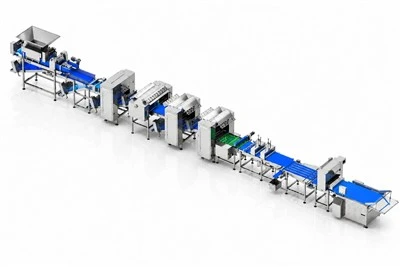
Let me break this down like I would for a first-time bakery owner who just quit their 9-5 to chase their bun dream (no shade—we’ve all been there). When most people say “fancy bun production line” these days, they’re talking about a complete processing-to-packaging system, not just the stuff that turns dough into a baked good. The core parts you can’t skip? Dough preparation (mixing, proofing, maybe sheeting if you’re making layered buns), shaping (think of the little twisting machines that make those iconic swirls, or the injectors that stuff cream into the center), baking, cooling (super important—you can’t package warm buns, they’ll get soggy or mold), and then… packaging.
Wait, but hold on—are there cases where a fancy bun line doesn’t include packaging? Sure. If you’re a small-batch artisan making 200 buns a day for farmers markets, you might run your dough through a basic line, bake them, then package them by hand. But let’s be real: if you’re spending money on a “production line” instead of a few tools and a counter, you’re probably scaling. Scaling means you don’t want your packaging process to be the bottleneck. I’ve seen way too many bakery owners drop $10k on a shaping and baking line, then get stuck at the end because they’re hand-packaging 300 buns an hour while their line cranks out 1,000. That’s a waste—all that fancy gear sitting idle because you skipped the packaging part.
Now, let’s get specific about what packaging machines actually come with a standard fancy bun production line, because this is where people get confused. When I sell a line, I don’t just hand over a bunch of machines and say “good luck.” I include a flow wrapper (that’s the machine that wraps individual buns in that smooth, sealed plastic, right?)—it’s the most common packaging machine for fancy buns because it can handle different shapes (swirls, round, even the rectangle ones), it seals airtight so the buns stay fresh, and it can print a little “best by” date right on the wrapper. For bakeries that want to pack multiple buns into a box, we also add a case sealer or a tray packer that puts 6 or 12 buns into a branded tray, then wraps the whole tray. Some lines even have labeling machines that stick your bakery’s logo or a “nut-free” warning right on the wrapper—no extra work for your team.
I know what you’re thinking: “This sounds expensive.” Yeah, it’s an investment, but let’s do the math. If you’re hand-packaging, you’re paying an employee $15 an hour to do a job a $2k packaging machine can do 24/7. That machine will pay for itself in 3 months, easy. Plus, when you’re selling to grocery stores or online, they require airtight packaging with a clear “best by” date. They won’t touch buns wrapped in a zip-top bag and sealed with a piece of tape. I’ve had clients come to me after trying to scale without packaging, crying because a grocery chain turned down their entire batch. Don’t make that mistake.
Wait, but what about custom fancy buns? Like, if you’re making those big, elaborate birthday bun cakes or limited-edition holiday buns? Can a production line still include packaging for weird shapes? Absolutely. The packaging machines I recommend are adjustable—you can tweak the size of the wrapper or tray to fit a bun that’s 3 inches wide or 6 inches wide. I had a client last year making ube star-shaped buns for a pop-up, and we just adjusted the flow wrapper’s settings and it worked perfectly. No need for a whole new machine. That’s the thing about modern fancy bun production lines—they’re flexible, not one-size-fits-all.
Let me also bust a myth here: some people think that adding a packaging machine will make their buns less “artisanal.” No way. The only thing less artisanal than a perfectly wrapped, fresh bun is a bun that gets squished in a hand-sealed bag because you dropped it when you were rushing. Packaging machines are precise—they handle the buns gently, so your fancy swirls and drizzles don’t get smushed. Customers actually prefer the neat, sealed wrapper because it looks professional and tells them the bun was made with care, not just thrown together. I’ve seen that firsthand—clients who added packaging to their lines saw a 20% jump in sales within 6 months because their buns looked better on the shelf.
Now, let’s talk about when you might not need packaging in your line, just to be fair. If you’re a tiny bakery making less than 500 buns a day, selling only out of your own shop, and you’re cool with customers grabbing a loose bun from a basket, then yeah, you don’t need a full packaging line. But even then, if you start selling online or to local cafes, you’ll need it. I had a client who started in a 100 sq ft shop, only selling to walk-ins, and 2 years later they were selling to 5 cafes within an hour drive. They came back to me because they couldn’t keep up with packaging by hand. That’s the thing about growing a bun business—you’ll outgrow your setup faster than you think.
So, if you’re in the market for a fancy bun production line, here’s my advice: don’t just look at the mixing, shaping, and baking parts. Ask if the line includes packaging machines. And not just any packaging machines—ask what kind, if they’re adjustable for different bun shapes, if they can print dates and labels, and if they can keep up with your projected output. If a supplier tries to sell you a line that ends right after the oven, run. You’ll regret it when you’re stuck with a bunch of baked buns that you can’t sell because you can’t package them.
I’ve been doing this long enough to see every mistake in the book, and the biggest one I see is skipping packaging in a fancy bun line. It’s like buying a fancy coffee maker and not buying filters—you can make the coffee, but you can’t serve it. The packaging part is the final step that turns a batch of great buns into a product people will buy, whether that’s at a grocery store, a farmers market, or their front door.
If you’re ready to stop messing around with bottlenecks and hand-packaging, and start a fancy bun line that actually scales, hit me up. I don’t do pushy sales calls—we’ll chat about how many buns you want to make a day, what kinds of fancy buns you’re selling, and what your budget is, and I’ll hook you up with a setup that works for your bakery, not some generic line I got from a catalog. No hidden fees, no jargon, just straight talk about making great buns and making your business grow.
Cookie Machine References:
- American Bakers Association. (2022). "Trends in Artisanal Bakery Production and Packaging". Baking Industry Report.
- Food and Drug Administration. (2021). "Food Packaging Requirements for Shelf-Stable Bakery Products". FDA Food Safety Guidelines.
- Bakery Production and Processing Magazine. (2023). "Scaling Artisanal Fancy Bun Production: Key Equipment Considerations". Industry Best Practices Issue.
Shanghai Longyu Electro-Mechanic Technology Co., Ltd.
Shanghai Longyu Electro-Mechanic Technology Co., Ltd. is one of the most professional fancy bun production line manufacturers and suppliers in China, featured by quality products and good service. Please feel free to wholesale advanced fancy bun production line made in China here from our factory. Also, custom service is available.
Address: No.66, Guangfulin East Road, Zhongshan Subdistrict, Songjiang District, Shanghai, China
E-mail: sales4@longyu-sh.com
WebSite: https://www.longyu-sh.com/
