If you’ve ever stood in a workshop, staring at a faulty pipe connection that’s leaking water mid-test, or pulled apart an old appliance where a rubber gasket crumbled to dust when you tried to replace it, you’ve probably wondered: can I just get a gasket that fits perfectly? For years, I fielded this exact question every week from engineers, maintenance teams, and small business owners who’d settled for generic, one-size-fits-all gaskets that never quite worked right. As a rubber gasket supplier who’s spent 12 years shaping, testing, and problem-solving with these small but critical parts, let me break this down straight: yes, rubber gaskets absolutely can be customized—and that customization is often the difference between a part that fails and one that keeps your operations running. Rubber Gaskets
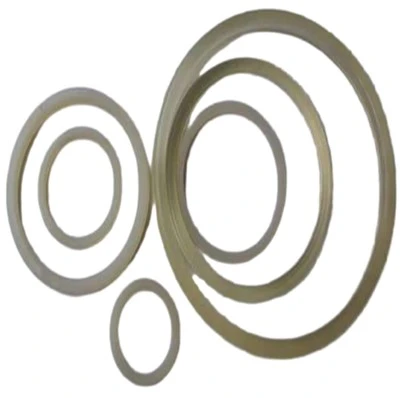
A lot of people I talk to assume “custom” means something over-the-top, or only for big aerospace clients with million-dollar budgets. But that’s not the case. Customization for rubber gaskets starts way before we even touch the rubber compound, and it fits every kind of project, from a home brewer’s kegerator seal to a chemical plant’s high-pressure pipeline. Let’s start with the basics: a rubber gasket’s job is twofold—to create a tight, leak-proof seal between two surfaces and to withstand the conditions it’s exposed to. Generic gaskets are made for average, common conditions—room temperature, mild pressure, regular water use—but if your project deviates even a little from that, a generic part will let you down.
Take a recent example: a local wastewater treatment plant reached out last year, frustrated because off-the-shelf gaskets for their clarifier valves were cracking within six months. The plant’s valves sit in a space that swings between near-freezing temperatures in winter and 100°F+ in summer, plus they’re exposed to a mix of chemicals in the wastewater. Generic EPDM gaskets, the most common go-to, can’t handle that kind of extreme temperature swing and gradual chemical breakdown. Instead of telling them to buy a different generic gasket, we customized a formula using a blend of nitrile rubber and a specialized UV/ozone inhibitor. We also matched the exact groove of their valve flange—something generic gaskets never get right, because flanges often have subtle imperfections from manufacturing. The custom gasket’s been in place for 18 months now, with zero leaks. That’s the kind of difference customization makes.
The first step to customizing a gasket, in my experience, is figuring out what the end conditions actually are. A lot of customers come to us with a part number from a generic supplier, thinking that’s what they need, but what they really should bring is a list of variables: what fluid (if any) will it be sealing—water, oil, acid, ammonia? What’s the temperature range, both hot and cold? What’s the pressure: is this for a low-pressure water line, or a high-pressure hydraulic system? And then there are the physical details: what’s the exact inner and outer diameter? Is it a flat gasket, a ring with holes, a custom shape like a D-cut or square? Even something as small as a groove depth can make a generic gasket either too loose (leaks) or too tight (tears when installed).
I remember a small automotive repair shop owner who called me upset because he couldn’t find a head gasket for a 1967 Mustang he was restoring. Off-the-shelf head gaskets for Mustangs from that era are too thick or too thin, and he’d already blown two engines from improper seals. We measured his engine block’s exact deck surface, matched the metal core’s thickness to his engine’s vintage specs, and used a high-temperature silicone rubber blend that could handle the engine’s operating heat. That’s a small, low-volume custom job—only two gaskets, in this case—but it was way more valuable to him than buying three generic ones that wouldn’t work.
What surprises a lot of new customers is that custom rubber gaskets don’t have to be expensive, either. Years ago, I thought customization was only for big orders, but I’ve had one-man machine shops come to us for as few as 10 custom gaskets. The key is the way we manufacture them: we use computer-controlled cutting (CNC) for both small and large volumes, so even a small order has minimal setup cost. For larger orders, injection molding is more efficient, but we can also do die-cutting for rubber sheets, which is perfect for custom shapes that don’t require a mold. That flexibility is what makes customization accessible for everyone, not just Fortune 500 companies.
Of course, there are limits to what we can customize. I’ve had customers ask for a gasket that can seal liquid hydrogen at -423°F, which is physically possible but not something most small suppliers can do without specialized equipment. But for 99% of the applications our customers bring to us—food and beverage, plumbing, industrial equipment, HVAC, automotive, marine—we can customize a rubber gasket that fits. The other limit is also one of the best parts: we can’t make a gasket perform better than the rubber compound allows. If you need a gasket that resists oil, nitrile is the right choice. If you need one that’s safe for food or medical use, FDA-approved silicone is the way to go. Customization means matching the compound to your needs, not forcing a one-size-fits-all part that doesn’t hold up.
That’s why we don’t just sell gaskets—we work with customers to figure out what their specific needs are. Last quarter, a craft brewery came to us for custom gaskets for their fermentation tanks. They told us their generic EPDM gaskets were imparting a plastic taste to their beer, and they needed something food-safe that could handle the pressure of carbon dioxide buildup during fermentation. We switched to a custom blend of BPA-free silicone, which is inert to food and doesn’t leave any off-flavors. We also added custom bolt holes spaced exactly to their tank’s flange, so installation was faster and no extra drilling was needed. The brewery’s quality control team noticed the difference within a month, and they’ve been coming back to us ever since for all their custom parts.
I think a lot of the hesitation around custom gaskets comes from past experiences with suppliers who promised custom work and delivered something that was close, but not right. Early in my career, I had a run-in with a supplier who quoted me a custom gasket for a hydraulic pump, but they used a generic mold and trimmed it to fit, resulting in a part that leaked under 50 PSI, half the pressure we needed. That’s why for our team, every custom gasket goes through a testing phase before it leaves our facility. We test for leak rate, pressure resistance, temperature tolerance, and chemical resistance to make sure it matches what the customer asked for. Sometimes that means tweaking the compound by 5% or adjusting the shape by a millimeter—small changes that make a huge difference in performance.
So why do so many people still use generic gaskets? It’s often about convenience. If you need a gasket for a standard 2-inch pipe, you can grab one at any hardware store in five minutes. But when that generic gasket fails, the cost isn’t just the price of the part. For a maintenance team, a failed gasket can mean hours of downtime, clean-up costs, and even safety risks if the leak is from a hazardous material. For a small business, a faulty part can mean lost product, missed deadlines, or even damage to their reputation. That’s where custom gaskets pay for themselves.
Let’s circle back to the original question: Can rubber gaskets be customized? The answer is a resounding yes—and the best part is that customization isn’t a luxury anymore. Whether you need 10 gaskets for a vintage appliance, 10,000 for a new production line, or something that can withstand specific conditions no generic part can handle, a custom rubber gasket is a practical, cost-effective solution. It’s about getting a part that’s made exactly for your needs, not settling for a part that’s made for everyone else’s.

If you’re tired of generic gaskets that leak, crack, or just don’t fit right, reach out to our team to discuss your custom gasket needs. We’ll work with you to identify the right rubber compound, shape, and size for your application, and we’ll make sure you get a part that works as hard as you do.
Industrial Components References
- Rubber Chemistry and Technology, Vol. 94, No. 3, 2021, "Custom Compounding of Elastomers for Sealing Applications"
- Gasket Fabrication and Assembly Handbook, Third Edition, Industrial Press, 2019
- ASME Boiler and Pressure Vessel Code, Section VIII, 2023, Requirements for Gasket Materials and Custom Fabrication
- Food and Drug Administration (FDA), 21 CFR Part 177, rubber materials for food contact surfaces, 2022 revision
- Society of Tribologists and Lubrication Engineers (STLE), "Custom Elastomer Seals for Extreme Environments", 2020 Conference Proceedings
Hengshui Minai Rubber & Plastic Technology Co., Ltd.
Hengshui Minai Rubber & Plastic Technology Co., Ltd. is one of the most professional rubber gaskets manufacturers and suppliers in China, featured by quality products and good price. If you’re going to buy advanced rubber gaskets made in China, welcome to get quotation from our factory. Welcome to contact us for customized service and OEM/ODM service.
Address: West of the Town, Jiangheliu Town, Jing County, Hengshui City, Hebei Province
E-mail: mnrubberseal@outlook.com
WebSite: https://www.mnrubberseal.com/
