As a supplier of brick tunnel kilns, I’ve seen firsthand how the size of bricks can have a huge impact on the firing process. In this blog post, I’m gonna break down what those impacts are and why it matters to you, whether you’re a brick manufacturer or just someone interested in the brick – making industry. Brick Tunnel Kiln
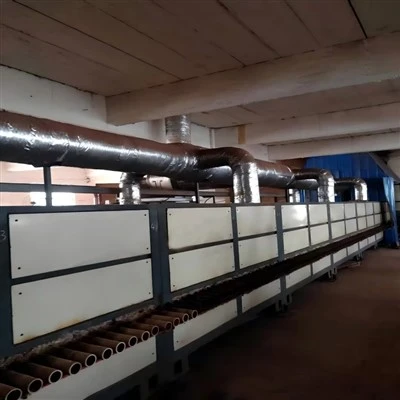
Heat Transfer
One of the most significant ways brick size affects firing in a tunnel kiln is through heat transfer. Smaller bricks have a larger surface – area – to – volume ratio compared to bigger bricks. This means that heat can penetrate smaller bricks more quickly and evenly. When we fire smaller bricks, the heat can reach the core of the brick faster, reducing the overall firing time.
For example, let’s say we have two types of bricks: one is a standard small – sized brick and the other is a large, oversized brick. The small brick will start to heat up and reach the desired firing temperature in a relatively short time. On the other hand, the large brick takes much longer for the heat to make its way to the center. This difference in heat transfer can lead to inconsistent firing results if the kiln isn’t properly adjusted.
If the kiln firing schedule is set for small bricks and we try to fire large bricks, the outer layer of the large bricks may get over – fired while the inside remains under – fired. Conversely, if we set the schedule for large bricks when firing small ones, we’re wasting energy because the small bricks are already fully fired way before the set time is up.
Firing Time
The size of the bricks directly correlates with the firing time. We’ve already touched on the heat – transfer aspect, but it’s worth diving deeper. Smaller bricks generally require less time to fire. This is beneficial in terms of production efficiency. A kiln can cycle through more batches of small bricks in a given period compared to large bricks.
This increased production capacity can be a game – changer for brick manufacturers. If you’re looking to scale up your production, focusing on smaller brick sizes might be a smart move. You can meet market demand more quickly and potentially increase your revenue.
However, it’s not always that simple. Firing time also depends on the type of clay used and the desired properties of the final product. But in most cases, when all other factors are equal, smaller bricks win the race in terms of firing time.
Energy Consumption
Energy consumption is a major concern for any brick manufacturer. And brick size has a close relationship with it. Since larger bricks take longer to fire, they consume more energy. The longer the kiln has to run at high temperatures, the more fuel it burns, whether it’s natural gas, coal, or some other energy source.
As a kiln supplier, I often meet with manufacturers who are struggling to keep their energy costs down. Changing the brick size can be an effective solution. By reducing the size of the bricks, they can significantly cut down on energy usage. This not only helps the bottom line but also makes the production process more environmentally friendly.
But, switching to smaller bricks isn’t always straightforward. There are market demands for certain brick sizes, and manufacturers need to balance energy savings with customer needs.
Structural Integrity
The firing process is crucial for ensuring the structural integrity of the bricks. Different brick sizes can react differently during firing. Larger bricks are more prone to cracking and warping. This is because as the large brick heats up and cools down, the outer layers and the inner core expand and contract at different rates.
The stress caused by these differential expansions can lead to internal and external cracks. In contrast, smaller bricks are less likely to experience these issues. The more uniform heat transfer in small bricks means that the expansion and contraction are more consistent throughout the brick.
For a brick manufacturer, this is a big deal. Cracks and warping can lead to a high rate of defective products, which not only wastes resources but also damages the company’s reputation. So, when considering brick size, the impact on structural integrity can’t be ignored.
Kiln Design and Layout
The size of the bricks also has an impact on the design and layout of the tunnel kiln. If you’re mainly producing large bricks, the kiln needs to be designed with enough space to accommodate them. The loading and unloading systems also need to be adjusted to handle the larger size and weight.
On the other hand, if you’re focusing on small bricks, you can optimize the kiln for higher – density loading. This means you can fit more bricks in the same kiln space, increasing the production capacity even further.
As a kiln supplier, I work closely with manufacturers to design kilns that are tailored to their specific brick – size requirements. A well – designed kiln can make a huge difference in the efficiency and quality of the firing process.
Market Considerations
While we’ve been discussing the technical aspects of how brick size affects firing, we can’t forget about the market. Different regions and construction projects have different preferences for brick sizes. For example, in some areas, large – format bricks are popular for modern architectural designs, while in other places, traditional small – sized bricks are still the go – to choice.
As a brick manufacturer, you need to balance the market demand with the technical limitations and advantages of different brick sizes. You might need to invest in multiple kilns or adjust your production process to meet the diverse needs of your customers.
Conclusion
So, to sum it up, the size of bricks has a far – reaching influence on the firing process in a tunnel kiln. It affects heat transfer, firing time, energy consumption, structural integrity, kiln design, and marketability. As a brick tunnel kiln supplier, I understand that every manufacturer has unique needs and challenges.
If you’re a brick manufacturer and you’re looking to improve your firing process, increase efficiency, or reduce costs, the size of your bricks could be a key factor to consider. Whether you’re planning to switch to a different brick size or optimize your current kiln for the existing size, I’m here to help. We can work together to design the perfect tunnel kiln that suits your specific requirements.
Rotary Kiln If you’re interested in learning more about how our brick tunnel kilns can benefit your business, or if you have any questions about the impact of brick size on firing, don’t hesitate to reach out. Let’s start a conversation about how we can take your brick – making operation to the next level.
References
- Smith, J. (2018). "Brick Manufacturing Technology". Industrial Press.
- Johnson, A. (2020). "Energy Efficiency in Brick Firing". Journal of Sustainable Construction.
- Brown, C. (2019). "Structural Properties of Fired Bricks". Construction Materials Research.
Henan Yaxin Kiln Co., Ltd.
Henan Yaxin Kiln Co., Ltd. is one of the most professional brick tunnel kiln manufacturers and suppliers in China. With abundant experience, we warmly welcome you to buy high quality brick tunnel kiln with the latest design from our factory. Good service and punctual delivery are available.
Address: Jixian Industrial Zone, Shangqiu City, Henan Province
E-mail: 1543563178@qq.com
WebSite: https://www.hnyxkiln.com/
